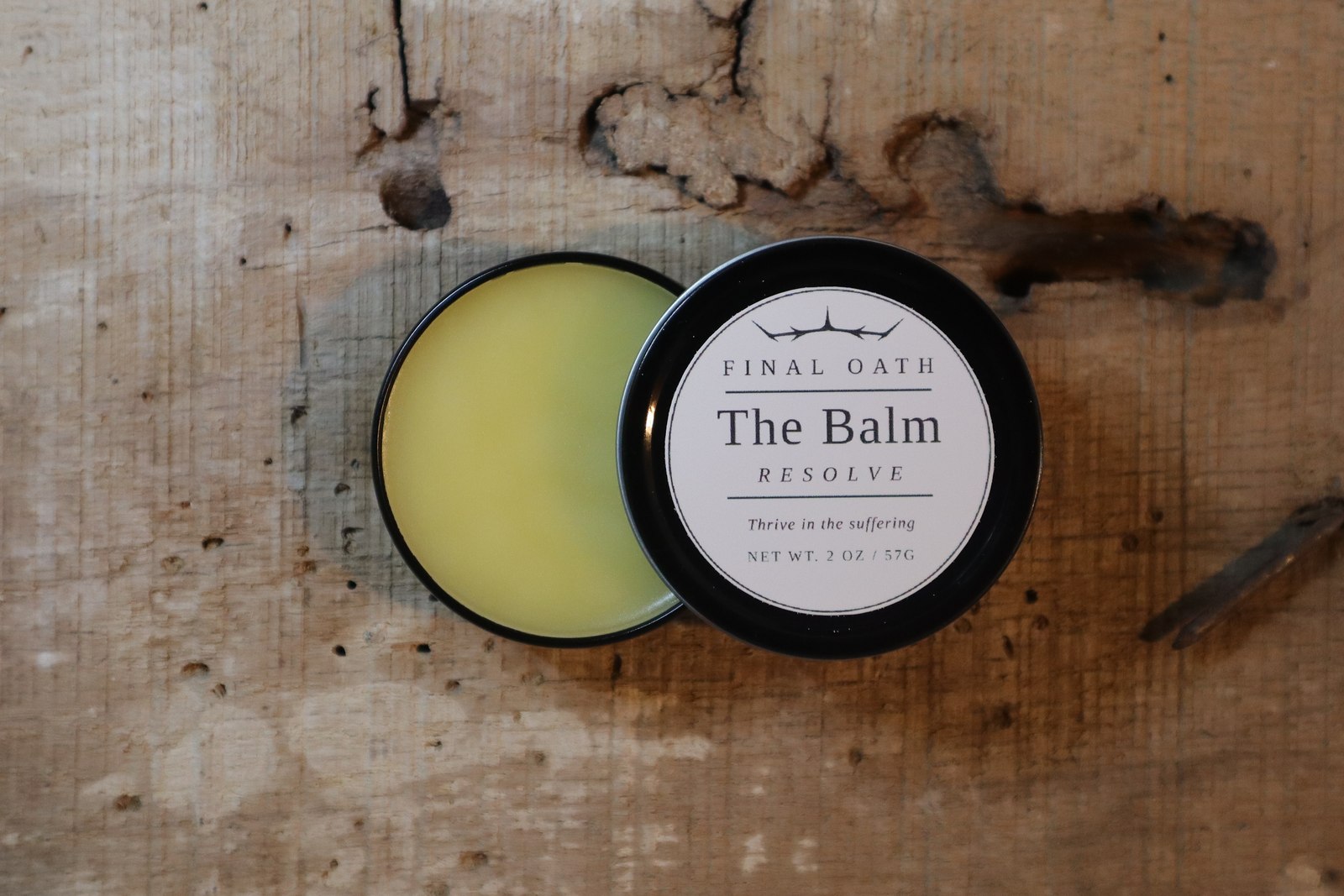
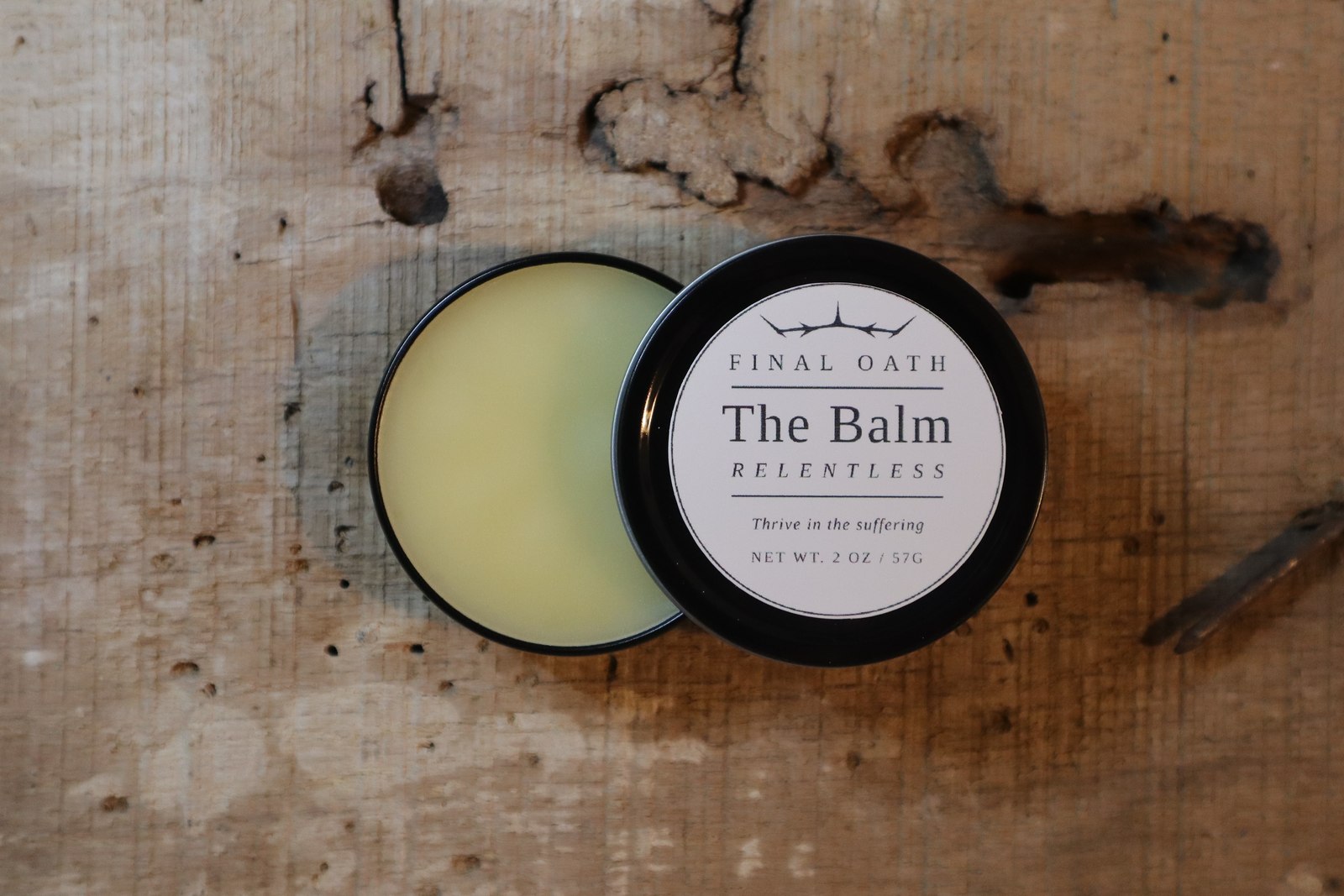
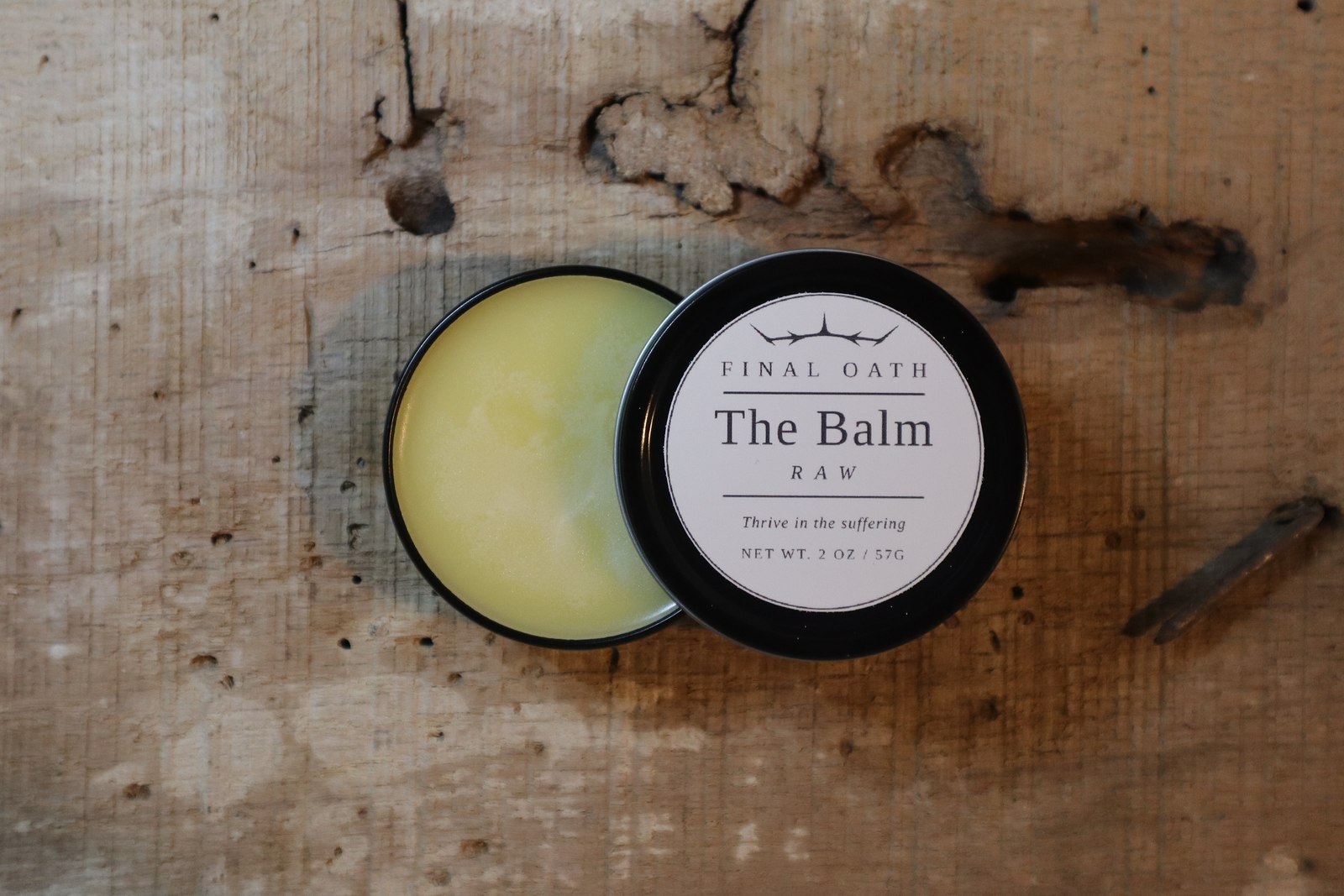
Roughly twelve to eighteen months unopened in a cool dark place, and about a year once you have opened it and started putting fingers in it. There is no water in it, so nothing is growing in there. The thing that eventually ends it is the fats slowly oxidizing.
Why there is no mold risk
Bacteria and mold need water. A tallow balm is fat and wax with no water in it at all, which is why it needs no preservative system. This is the main practical difference between a balm and a lotion: a lotion is largely water and has to be preserved or it becomes a problem quickly.
So a balm does not spoil in the way food does. It goes rancid instead, which is a different and much slower process.
How you will know it has turned
- Smell. The reliable one. Rancid fat smells sharp, waxy, a bit like old crayons or stale nuts. You will not have to wonder.
- Colour. Deepening toward yellow is normal aging and fine on its own.
- Texture. Graininess is usually just fat recrystallizing after getting warm, not spoilage. Warm it in your hands and it is fine.
If it smells right, it is fine. If it smells sharp or off, throw it out, and note that it will not hurt you, it will just be unpleasant.
Storage
- Cool, dark, dry. A drawer or cabinet beats a windowsill or the shelf in a steamy bathroom.
- Keep the lid screwed on. Air is what oxidizes fat.
- Do not leave it on a dashboard in July. It will melt, and when it sets again it will be grainy. Still usable, just less pleasant.
- Clean dry fingers. Wet fingers introduce the one thing the tin does not have.
- No need to refrigerate, and it makes it too hard to use.
If it melted
Nothing is ruined. Let it set at room temperature rather than in a fridge, since setting slowly gives a smoother result. If it comes back grainy, warm a fingertip's worth in your palms and it will feel normal going on. Grain is a texture issue, not a spoilage one.
Why a small tin is the right size
A 2oz tin lasts most people six to ten weeks at daily use, well inside the useful life. That is deliberate. A bigger jar sounds like better value right up until the last third of it goes stale in a cupboard.
Because it is made in small batches
Every tin is poured in a small run, so what you receive was made recently rather than sitting in a warehouse for a year of its own shelf life before it reached you. Made by hand in small batches in Wakarusa, Indiana. Seven ingredients, and 5% of every sale goes to FreedomSystem, which connects veterans through authentic camaraderie and meaningful programs.